
The past does not exist; only memory does, and memory always happens in the present. Paulo Coelho once wrote, “Past and future exist only in our memory. The present moment, though, is outside of time, it’s Eternity.” The past is not a place we can return to, not a room we can walk back into and look around. It is something we make, moment by moment, out of fragments and feelings and the quiet work of imagination. We speak of the past as though it were a distant country, yet we live inside its rearrangements, its echoes, its soft insistence. Memory is not an archive; it is a living act. It is the way the present keeps dreaming.
The broadest argument is simple enough: the past is accessible only through memory, and memory is a present act. No one can step outside the now to inspect the past directly. We encounter it only as recollection, interpretation, or narrative. And because memory is creative, because it paints rather than records, the past we “remember” is always being made anew. Time is not a line; it is a pulse, beating in the present.
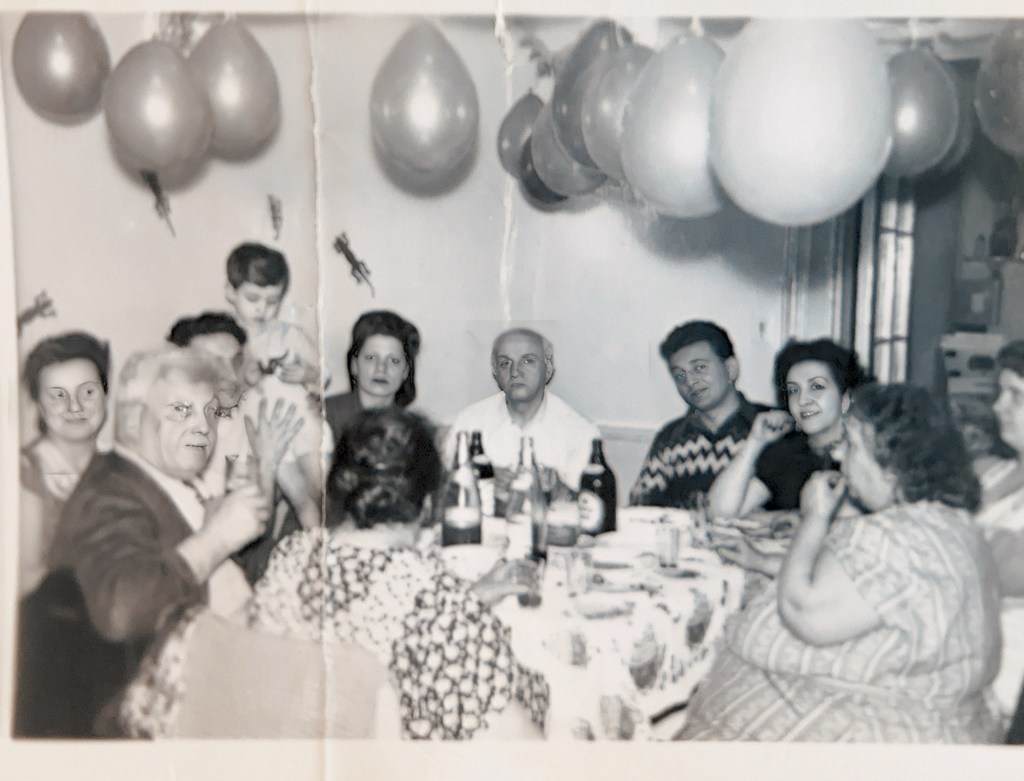
A thought experiment helps. Imagine someone sitting alone in a quiet room. Early morning. The kind of hour when the world hums softly and the air feels silky, as if it remembers something you have forgotten. On the table before them lies a photograph of a childhood birthday party. They pick it up. The image is fixed: balloons, a cake, a child’s smile, yet the memory that rises is anything but fixed. They recall the sweetness of frosting, the warmth of relatives gathered close, the feeling of being both celebrated and shy. But imagine them looking again ten years later. The memory shifts. The laughter seems tinged with melancholy; the child’s smile looks more fragile; the room appears smaller. The photograph has not changed, but the memory has. The present self has remade it: its losses, its wisdom, its private storms. The past of that birthday party is not stored in the photograph; it is generated in the act of remembering. The past is not a recording; it is a performance.
Neuroscience agrees that memory is reconstructive. The brain does not store perfect recordings; it rebuilds memories each time they are recalled, altering them through emotion, context, and added information. A remembered event is not a preserved artifact but a dynamic reconstruction. If the “past” changes every time we remember it, then it cannot be a fixed entity. It is continually created in the present. Neuroscientists often describe memory as plastic, malleable, and susceptible to revision. The past, as we experience it, is never stable. It is a living process, shaped by the shifting terrain of consciousness. Memory is not a window into the past; it is the artist that paints the past into being.
This creative dimension of memory expands when we consider cultural memory. Societies do not live inside the past itself; they live inside interpretations of the past. National myths, historical narratives, and collective traumas shape identity and political action. Yet these cultural memories are not neutral records; they are curated stories, continually revised to meet the needs of the present. A nation remembers its founding not as a precise sequence of events but as a narrative that reinforces contemporary values. Collective traumas, such as wars, genocides, revolutions are remembered through memorials, textbooks, and rituals that interpret the past rather than reproduce it. Cultural memory is therefore a present-tense activity, a way societies negotiate identity and meaning. Cultural memory behaves like personal memory: it reconstructs, reframes, and reinterprets.
The strongest counterargument insists that the past must exist independently of memory; otherwise, history collapses. If the past is only a present reconstruction, then historical truth becomes unstable, subjective, vulnerable to manipulation. Without an independent past, how can historians distinguish fact from distortion? How can societies guard against propaganda or revisionism? These concerns matter because they speak to the ethical stakes of historical accuracy.
But the counterargument misunderstands the claim. To say that the past exists only through memory is not to deny that events occurred. It is to recognize that our access to those events is always mediated by interpretation. History is not the past itself but a present narrative about the past. Recognizing this does not weaken historical analysis; it strengthens it. When historians acknowledge the interpretive nature of their work, they become more attentive to bias, perspective, and the limits of evidence. They understand that historical narratives are constructed, not discovered. The past remains meaningful, but only as an active dimension of the present.
This view also protects history from manipulation. If we imagine the past as a fixed, objective realm, we become vulnerable to anyone who claims privileged access to it. But if we understand the past as interpretive, we can evaluate competing narratives critically, asking how and why they were constructed. The instability of memory does not threaten historical truth; it demands rigor, transparency, and accountability.
In the end, the past is not a distant realm but a living force being reconstructed through memory. What we call “the past” is simply the present, thinking and feeling its way through experience. Memory is the quiet artist behind the curtain, brushing color onto what has been, shaping it into what is felt now. To understand memory as an active force is to recognize that time is not a line but a pulse; one that beats continuously in the now. Every recollection is a moment of creation. Every narrative is an act of interpretation. The past survives only through remembering. It is always here, breathing softly, waiting to be made again. And that is the deepest truth: the past is not what happened, but what the heart is still willing to imagine.


